
Quick Thoughts on the Hidden Cost of Diworsification
Diworsification rarely shows up immediately. It reveals itself years later in the form of acceptable (but disappointing) returns.

Dear readers,
Welcome back to the Quality Equities newsletter.
Diversification is often presented as the only free lunch in investing. In practice, beyond a certain point, it quietly becomes one of the most expensive habits an investor can adopt.
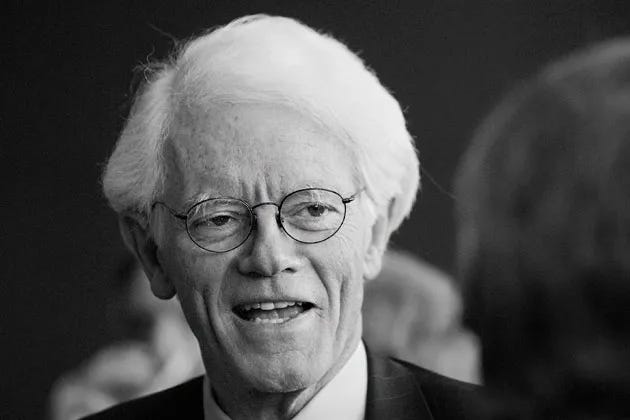
While he owned hundreds of stocks over the course of his career, Peter Lynch coined the term “diworsification” to describe what happens when investors keep adding holdings that reduce returns without meaningfully reducing risk. This usually occurs not because opportunities are abundant, but because conviction is scarce.
High-quality investing exposes this trade-off clearly.
Why Diworsification Hurts Returns
When you own a handful of exceptional businesses (i.e., companies with durable moats, high returns on capital, and long reinvestment runways), your results are driven by the compounding of those businesses over time. Adding more names does not improve the economics of those underlying businesses. It simply dilutes them.
Every new position competes for capital with your best ideas. If the new investment is of lower quality, lower conviction, or lower expected return, the portfolio’s long-term outcome mathematically deteriorates…even if short-term volatility appears smoother.
The hidden cost is opportunity cost, not drawdowns.
The Illusion of Safety
Over-diversification often feels prudent because it reduces headline risk. Fewer sharp drawdowns. Less regret when a single stock underperforms.
But true risk is not volatility…it is the risk of failing to compound at attractive rates over long periods of time.
Owning 30-40 average businesses does not meaningfully protect you from permanent capital loss if those businesses lack pricing power, reinvestment opportunities, or strong capital allocation. It merely disguises mediocrity behind a spreadsheet.
What Concentration Really Means
Concentration is not about recklessness. It is about selectivity.
A concentrated portfolio built around high-quality businesses:
Forces rigorous underwriting
Encourages long-term ownership
Aligns capital with the highest expected returns
Reduces the temptation to trade noise
Most great investors were not diversified in their best ideas. They were diversified in time, allowing compounding to do the heavy lifting.
A Better Framework
Instead of asking, “Is my portfolio diversified enough?”, a better question is “Would I rather add this new position than add to my best one?”
If the answer is no, diversification is likely working against you. Force yourself to have a higher bar for quality.
Closing Thought
Diworsification rarely shows up immediately. It reveals itself years later in the form of acceptable (but disappointing) returns.
In investing, as in life, progress rarely comes from doing more. It comes from doing less, better, and longer.