
The Munger Checklist: 5 Mental Models for Analyzing Compounding Machines
The Munger Checklist is not a substitute for financial analysis, but rather a necessary complement.

Dear readers,
Welcome back to the Quality Equities newsletter.
Charlie Munger, Warren Buffett’s long-time partner, didn’t just advocate for buying great businesses; he advocated for approaching investment with a multi-disciplinary mindset. He believed that the best investors are those who can synthesize knowledge from psychology, history, mathematics, and engineering.
For the quality investor seeking multi-decade compounders, simply looking at financial statements is insufficient. We need a framework to understand why a business succeeds and how long that success can last.
Here are 5 core Munger-inspired mental models that form a powerful checklist for analyzing and owning “compounding machines.”
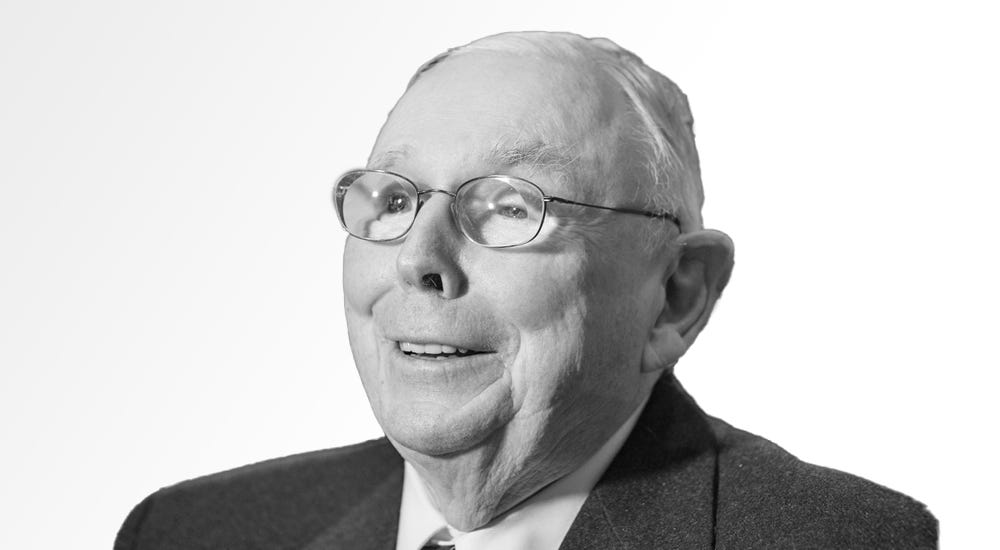
1. The Circle of Competence (Focus & Discipline)
This is perhaps Munger’s most fundamental rule: Know what you know, and more importantly, know what you don’t know.
When analyzing a potential investment, the circle of competence model acts as a powerful filter. If you cannot explain, in simple terms, how the company makes money and why its advantage is sustainable, it falls outside your circle.
Checklist Questions:
Can I explain the business model to a ten-year-old?
If the business relies on overly complex or opaque financial engineering, pass. Simplicity often equates to durability. Simple businesses are easier to manage and less prone to major strategic blunders.
Do I understand the industry’s key drivers and threats?
Identify the core competitive variables (e.g., cost, speed, regulation, technology risk). If you can’t name the top three threats, you’re guessing. Understanding the threats allows you to monitor the moat’s integrity over time.
Do I trust the competitive advantage?
If the moat is purely technical (a patent expiring in three years), it’s temporary. Look for behavioral or structural advantages. Long-term compounding is only possible if the edge persists.
